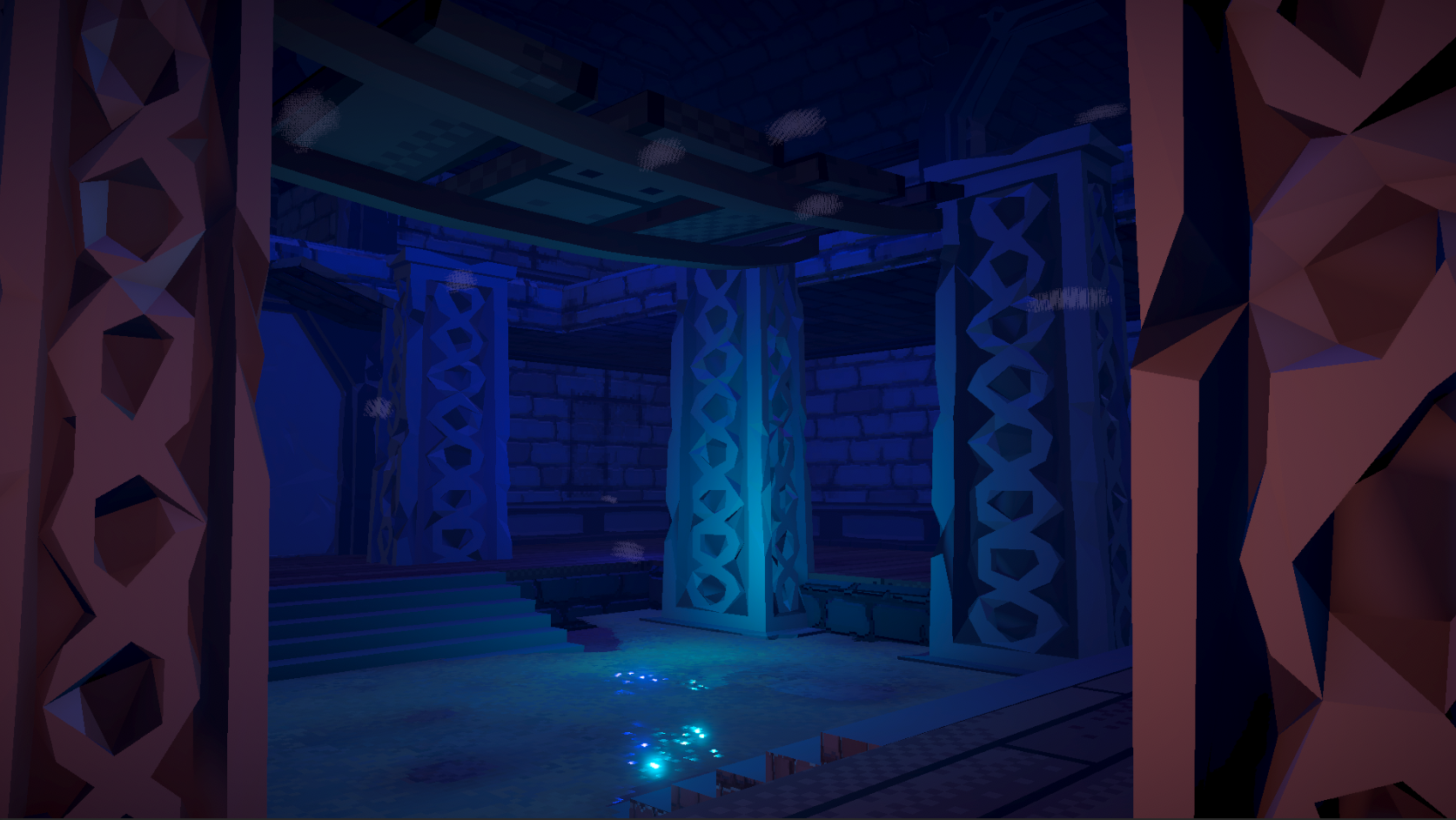
Development History
Overview
Guncaster's journey from concept to release wasn't a straight line. Over more than a year, the game went through three major reimaginations, survived multiple team shifts, and was guided at every turn by community feedback. This is the chronology of how a silly “wizard with a gun” concept evolved into a free-to-play boomer-shooter that resonated with 88% of players, and why the team that built it chose to pursue different paths afterward.
Below you'll find the iterations that reshaped Guncaster's vision, the features we cut along the way and why, the story of Grimoire Studios from founding to dissolution, and the lessons learned from shipping a game under real constraints.
Contributed Breakdowns
DEVELOPMENT HISTORY
Guncaster
A Boomer shooter fps where you fight enemies to regain the art of guncasting and your tower, featuring:
Fun and fluid movement system that lets players bounce off walls, dash around, and traverse their surroundings
Beautifully textured and stylized environment pieces to draw the whole game together
Hand made level modules that randomly generate to make each run unique
Diverse spell system with different spellcasting abilities, beware, your enemies can use it too
Dangerous enemy roster with engaging combat encounters for each zone
Scalable stats that let you become increasingly overpowered
An exhilarating multi-phase final boss encounter
Roguelite progression that carries stats between runs
Funny enemy voices and absurd ragdolls
Stunning music for both exploration and battle
Dynamic audio that reacts while you fight
A whooping 88% positive rating on Steam
But Guncaster wasn’t always like this
Timeline
Guncaster began as a 4-person team project in early 2024. The original concept followed a whimsical roguelite premise: a wizard armed with a gun exploring dungeons to reclaim his lost tower. The player would upgrade their abilities in a quirky mini-mall turned home base before venturing out into the dungeon. After a couple months of exploration and prototyping, the team decided to continue development and refine the vision.
Iteration 1
Guncaster’s humble beginnings
Following a brief break, the team regrouped with a clearer focus and began building a stronger foundation. It started with a fresh ideas and a blank canvas. The team evaluated progression and story and set off on production. This phase saw the introduction of entirely new systems, including a modular level snapping tool, a custom spellcasting framework, and fluid movement. Although progress was steady and productive, user feedback revealed that key gameplay elements still needed improvement. We took their feedback seriously, reshaping core systems based on what we learned.
Iteration 2
Guncaster testing out new ideas
After a leadership shift and serious evaluation of our external feedback, the team entered a final stretch dedicated to refinement. Broken systems were rebuilt, rough mechanics were polished, and the game’s tone shifted to better align with player expectations. While the end product evolved far from the original concept, the result was a tighter, more engaging experience that resonated more strongly with its intended audience.
Iteration 3
Guncaster blossoming into a game
A history
Guncaster went through three major iterations during development, evolving drastically from concept to release. These changes were guided primarily by our community and their continued feedback throughout the process. They told us what worked, what didn't, and what they hoped for and we listened.